

My Ultimate HTPC

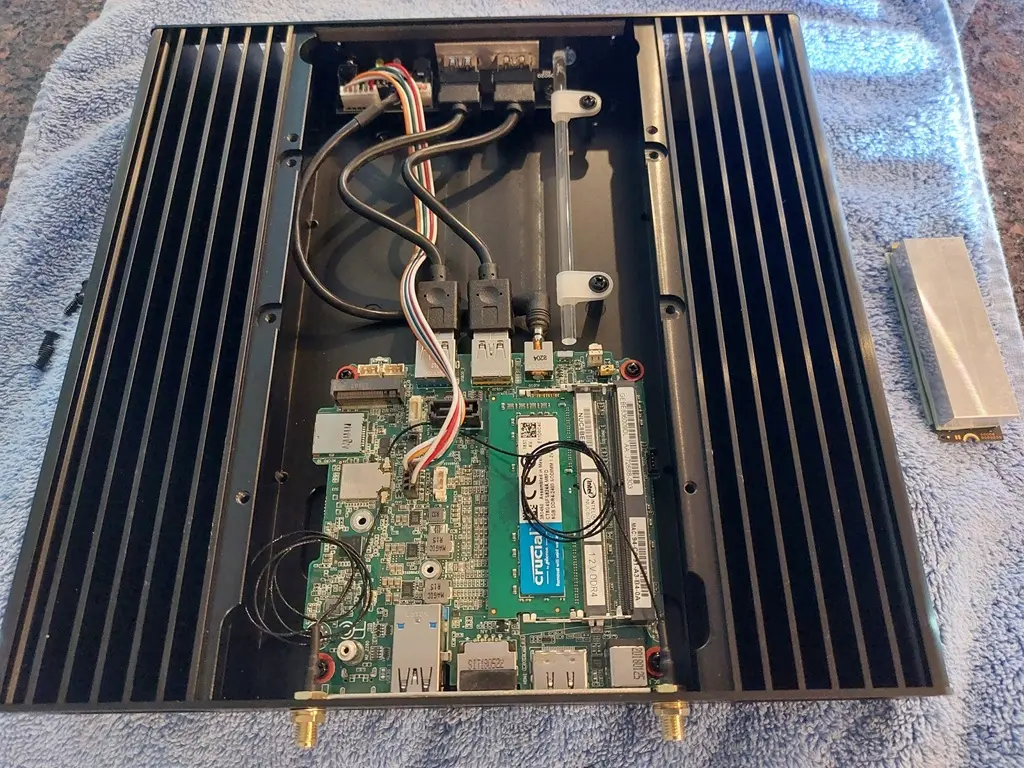
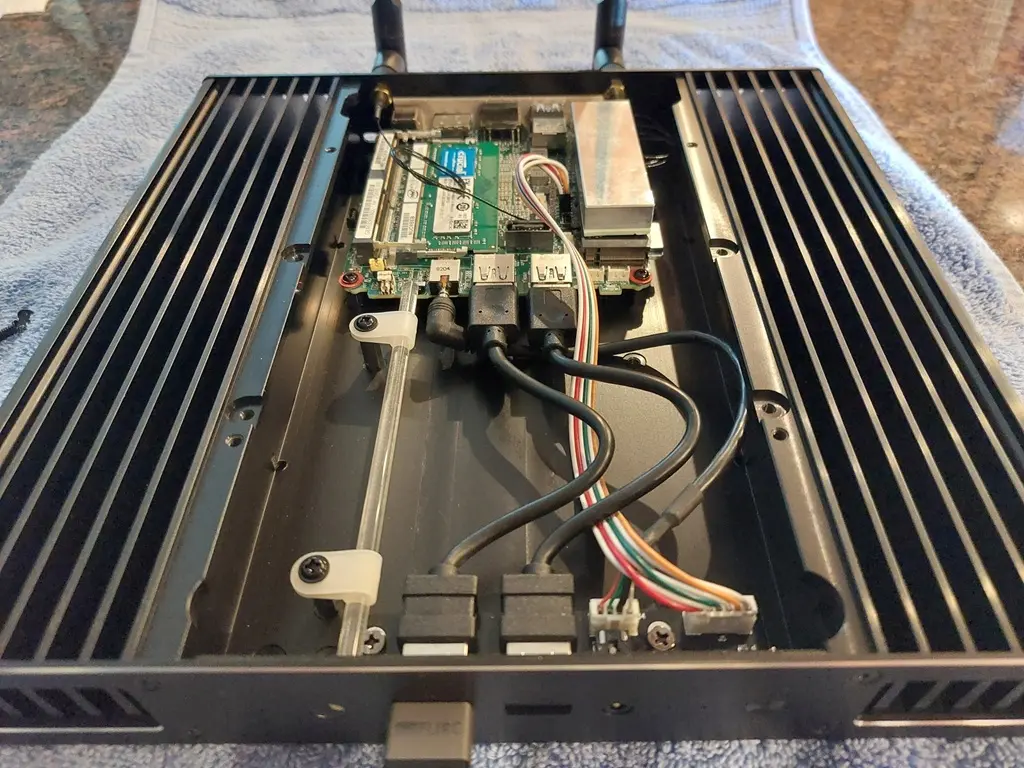
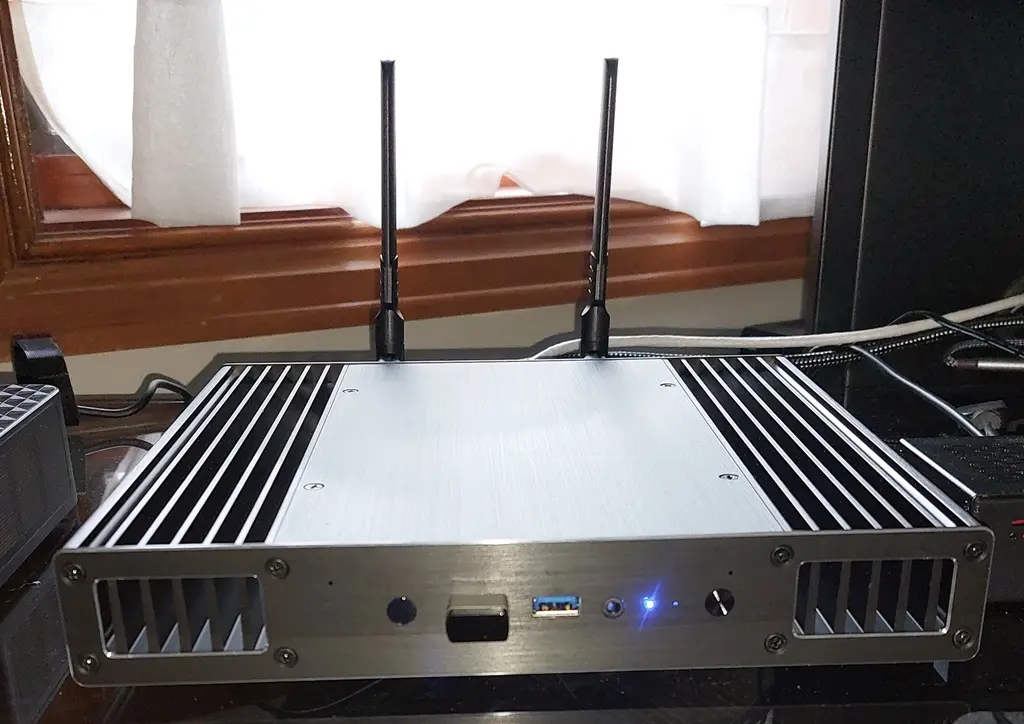
  • For a few years I've been on a quest to build a high performance HTPC (Home Theater PC) that was totally quiet and would support all major video codecs with hardware decoding. At long last I've achieved my goal. This HTPC is a combination of parts from an Intel NUC 8i7BEH, a fanless Akasa Plato X8 case, a FLIRC USB infrared receiver and a Nipeal external antenna kit from Amazon.

    This HPTC runs LibreElec, leveraging the Mezzmo Kodi addon I author with content being streamed from my Mezzmo server with 25K+ of media items. Performance and codec support are great, as well as stability. Almost all of my newer media is high bitrate H265 4K with HDR10. Dolby Vision isn't supported but I am not focused on that and feel it adds a layer of complexity. If LibreElec ever supports DV it will come along for the ride. It certainly isn't the cheapest HTPC available but I would contend one of the best performing with an internal SSD, running on Linux with an x86 processor makes all functions extremely snappy and the system overall very stable.

    The Akasa case is great, albeit a bit larger than I expected. It is a solid chunk of aluminum weighing over 1.5 kilograms. The cooling capacity of the case is better than I expected and better than the original NUC case with a fan. With the original NUC case setup the idle temperature was often around 100 F degrees and could hit over 130 F degrees which kicked in the fan noise. With the new Akasa case the idle temperature is around 83 F degrees and around 100 F degrees during high bitrate playback, even with MPEG2 files which I am not using HW decoding. Many times it remains under 90 degrees during playback. The external antennas perform far better than the stock NUC setup. I can see my neighbor's WiFi SSIDs from over 100 ft away with a moderate signal level.

    The overall assembly process was very easy and the Akasa case has room for a 2.5" SATA drive, in addition to the M.2 2280 slot on the NUC motherboard.


    Thanks,

    Jeff

  • "a bit larger" 🤣


    Yeah, these cases go overboard on heat dissipation but they make up for it in looking cool. :) I don't like that the cases only work with a single model of NUC but this was a toy approach for me vs. a least expensive.

    Jeff

  • Very nice and tidy.
    I considered the NUC platform for my HTPC, with a nice case ... but leaned into Jank-mode instead 8o

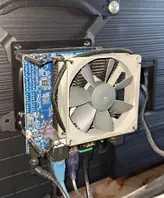
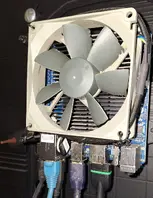
    I fixed a bare Odroid H4 to the VESA mount on the rear of my TV. It has a 90mm Noctua fan zip-tied to the heatsink, but tbh it's barely needed - rarely even spins up and is inaudible even with my ear right next to it.

    The main reason for going this route was the more modern codec h/w support of the Alder Lake based N300, specifically AV1.

    LAN is the onboard 2.5gb ethernet, Bluetooth is a USB dongle, IR from an ancient USB MCE compatible thing. DDR5 memory & NVME storage.

    If you ever find the NUC's, now very out of date, i7-8559U being a problem I heartily recommend the Odroid x86 boards - they are so tiny I'm sure you'd have no problem getting one to work in your nice case setup.

    Edited once, last by kurai (May 26, 2026 at 1:02 PM).

  • Very nice and tidy.
    I considered the NUC platform for my HTPC, with a nice case ... but leaned into Jank-mode instead 8o

    I fixed a bare Odroid H4 to the VESA mount on the rear of my TV. It has a 90mm Noctua fan zip-tied to the heatsink, but tbh it's barely needed - rarely even spins up and is inaudible even with my ear right next to it.

    The main reason for going this route was the more modern codec h/w support of the Alder Lake based N300, specifically AV1.

    LAN is the onboard 2.5gb ethernet, Bluetooth is a USB dongle, IR from an ancient USB MCE compatible thing. DDR5 memory & NVME storage.

    If you ever find the NUC's, now very out of date, i7-8559U being a problem I heartily recommend the Odroid x86 boards - they are so tiny I'm sure you'd have no problem getting one to work in your nice case setup.


    This build has been my toy and me trying to breathe more life into this NUC board. I've got a Beelink SER6 based upon an AMD Ryzen 5 6600H CPU that will run circles around the NUC i7 (with regards to CPU horsepower) and does AV1 in hardware. In fact I have a wide variety of endpoints. I running 10-15 clients of my Mezzmo server at any given time with different versions of LibreElec and Kodi all staying in sync..

    For me I don't do anything with AV1 right now. I've done testing with this NUC by disabling HW acceleration and running full bitrate 4K UHD HEVC through it. It handles it fine, CPU remains low and it doesn't get warm with this case. That is one advantage of the i7 over an i3 or i5 in that it seems to be able to handle things in software, if needed, and the massive heatsink case keeps things cool. I wasn't expecting this benefit. I may try some AV1 files and see how it does with software only playback.


    Thanks,

    Jeff

  • Interestingly that I went in and checked and under LibreElec HW acceleration for this NUC it has the option to enable AV1 hardware acceleration via VAAPI. So maybe a question is whether VAAPI detects the underlying capabilities and presents them as option or is it left up to the user to know which HW acceleration options presented are supported by the hardware or does VAAPI provide an abstraction layer of sorts allowing it to decode things not specific to the hardware ?

    Maybe the LibreElec team can lean in here on this question ?


    Thanks,

    Jeff