

[S912-H] Trying to install the latest stable LibreELEC 12.2 (2025.11) on the Minix Neo U9-H

  • Hello,

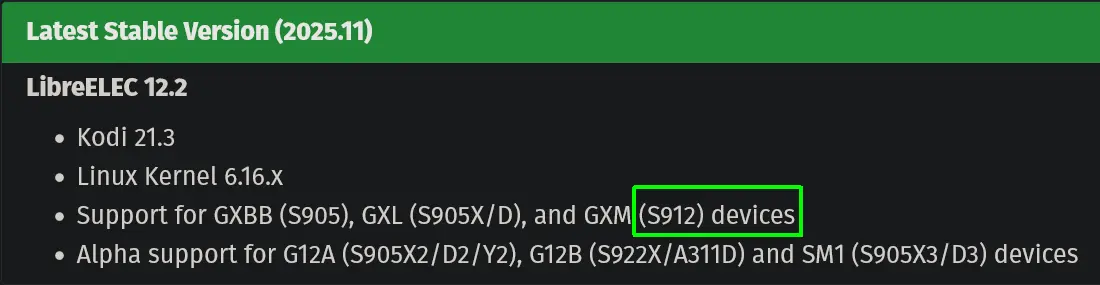
    I want to update my Minix Neo U9-H (S912-H) with the latest stable LibreELEC 12.2 version (2025.11). While the release does list the chip as supported (bright green highlight in the screenshot below), there is no image specifically for the Minix U9-H.
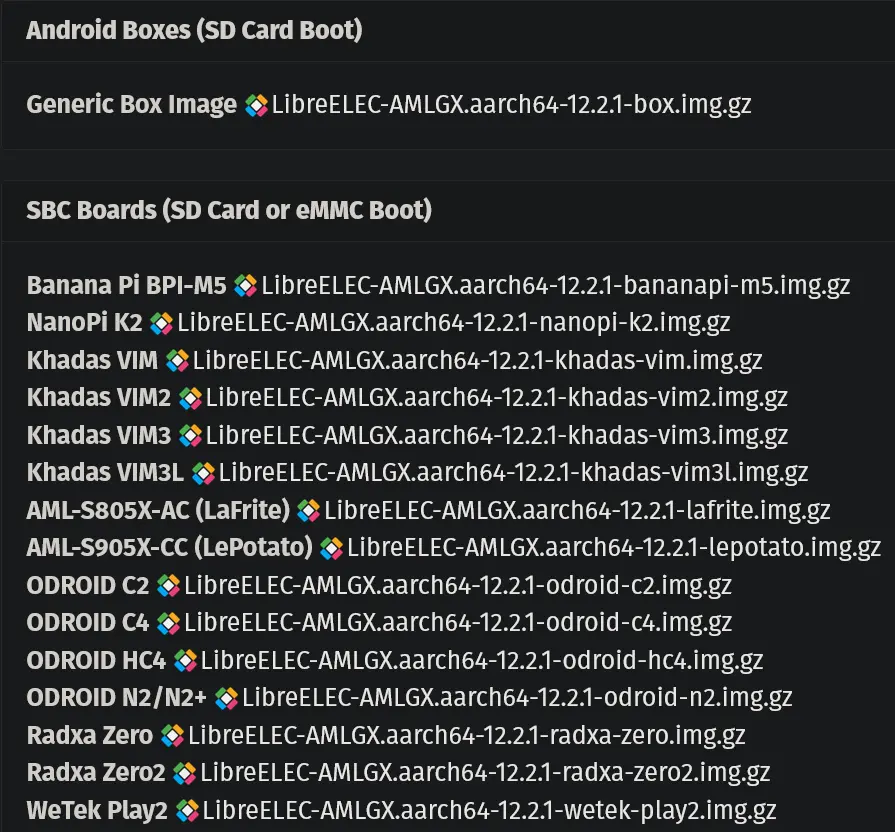
    There is a generic Android box image, and the SBC board specific ones (screenshot below). Which image can I use to flash on the Minix U9-H? Or should I use the generic box image?
    Thanks and cheers.

  • Update: I did flash the box image to an SD card after setting the correct dtb file in uEnv.ini, as described in https://wiki.libreelec.tv/hardware/amlogic. Was able to boot as well from the SC card and after the first boot resized the partitions and reboot, the second reboot gave a "Failure: display.service" message on the top left of the LibreELEC boot screen and the proceed to Kodi's (Omega version) logo when it got stuck.

    So I pulled the plug out, powered up and booted again, only to land on the same issue above. Since I'm not even able to get to the state of enabling SSH, how can I find out what's going on? Or share logs with anyone here for help?

    Can anyone assist with the next steps? chewitt , could you help?

    Thanks and cheers.

  • You can add ssh and video=HDMI-A-1:1920x1080M@60D to boot params in uEnv.ini and see if that helps? - The first forces the SSH daemon to start on boot so you can find the IP from another device and log in. The second forces the initial DRM state to 1080@60 output; sometimes it will run at 4K and TV's don't always agree with that. The display.service failure is harmless; this is from the VFD driver service (it fails as the U9-H has no VFD display IIRC). It has absolutely nothing to do with HDMI output.

    The LE13 images here: https://chewitt.libreelec.tv/testing/ run a newer kernel with some changes to HDMI/DRM things. You'll also find a U9-H image there (for eMMC install) but mainline u-boot support is still in a rather experimental state and when you hit issues with that image I have no time or interest for bug-hunting right now, so I would suggest sticking with the box image on SD card so that vendor u-boot is used. As much as I loathe vendor boot code it's probably doing a better job with that hardware.