Check /storage/.kodi/temp/kodi.log for errors and look at the time stamps.
If you see connection errors and time/date is not correct, set Kodi to delay startup after network for more than 10 seconds.
Check /storage/.kodi/temp/kodi.log for errors and look at the time stamps.
If you see connection errors and time/date is not correct, set Kodi to delay startup after network for more than 10 seconds.
"Wait for network" is enabled. Force updates didn't help, it still looks into 12.80.5.
Is there some way to add the 12.80.6 repo as a separate one? It seems that my attempt to create the repo zip file failed...
Give more wait time for networking to be up. ntp sync can require more than 10 seconds. Default 10 seconds might not be sufficient.
if your raspberry connects via wireless, set kodi to delay startup for at least 45 seconds instead of default 10. Some network libraries might need your system clock to be correct and it takes time to get clock in sync
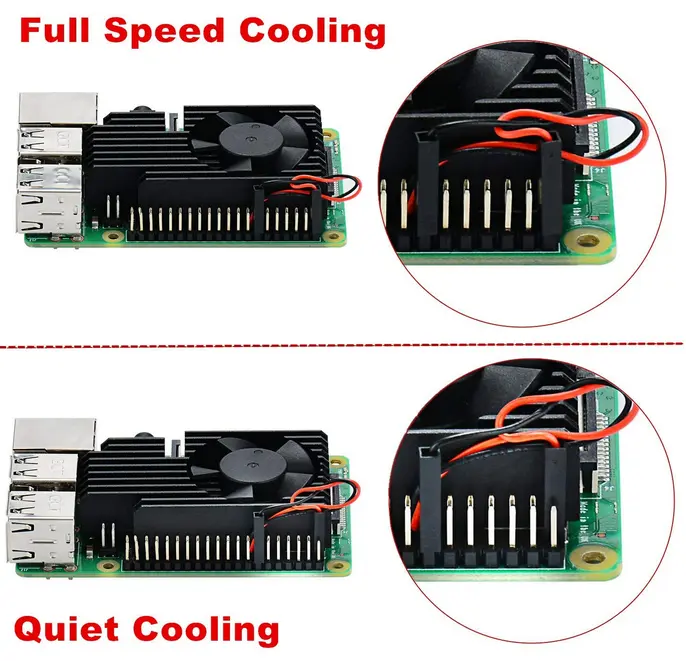
https://www.amazon.com/ElectroCookie-Raspberry-Aluminum-Compact-Lighting/dp/B0DZ63TD3M
★ Known Incompatible SSDs ★
The following SSDs have been reported to show compatibility issues with Raspberry Pi 5:
"The Silicon Power UD90 is a solid-state drive in the M.2 2280 form factor, launched on May 20th, 2022. It is available in capacities ranging from 250 GB to 2 TB. This page reports specifications for the 1 TB variant. With the rest of the system, the Silicon Power UD90 interfaces using a PCI-Express 4.0 x4 connection. The SSD controller is the PS5021-E21T from Phison,"
OP told that he researched things, but it seems like he missed something. Both ElectroCookie and Pironman advise against Phison based NVME drives.
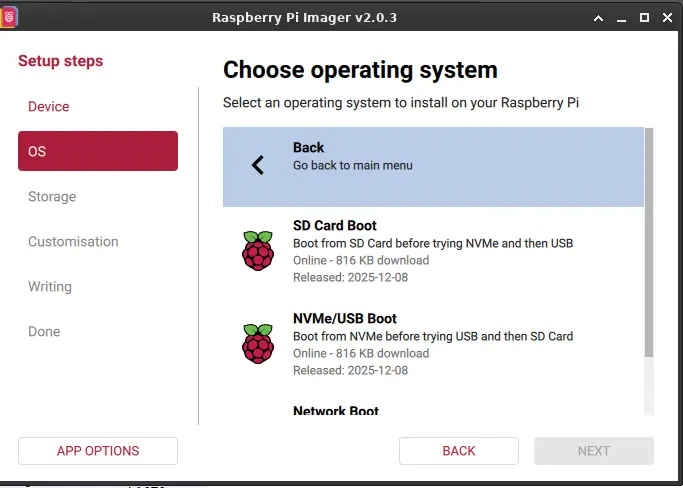
RPI imager has special option for making NVME bootable on RPI5. Flash sd card, boot from it and your device will try nvme first on next boot.
You might also want to enable pci-e v3 on nvme cause it does not do that by default.
Default
---
Sequential write speed 422812 KB/sec (target 10000) - PASS
Random write speed 102080 IOPS (target 500) - PASS
Random read speed 105873 IOPS (target 1500) - PASS
PCI-E v3
Sequential write speed 819200 KB/sec (target 10000) - PASS
Random write speed 135966 IOPS (target 500) - PASS
Random read speed 195047 IOPS (target 1500) - PASS
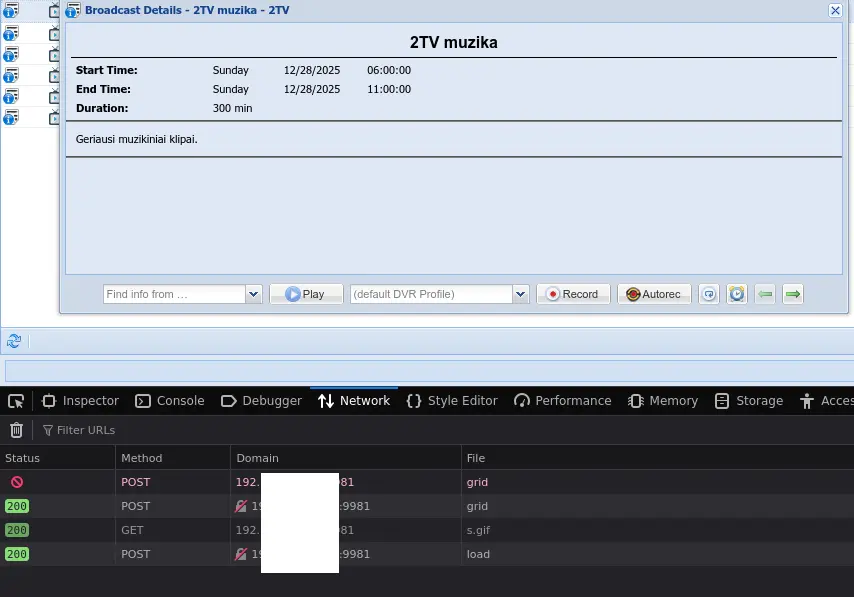
Trixie version does not link to imagecache/12 image. That ticket is for Chrome. I am normally on Firefox and Chromium is only alternative browser. That ticket is probably about "Play" button in broadcast details. It generates m3u8 playlist in Firefox and tries to play in browser on Chromium. My problem is about "Watch TV" launched from top right menu in web ui.
I guess I'll wait to see if situation improves over time. Maybe Android client support and integration with Jellyfin improve.
I am comparing tvheadend server (4.3-2528) addon on libreelec and tvheadend (4.3-2471) on raspberry os trixie version. libreelec one works with TVHplayer, but can't start live tv player and got broken images in web ui. trixie package can start live tv player and has no broken images, but breaks tvhplayer 3.5, has unstable channel list and tends to refuse connection or crash.
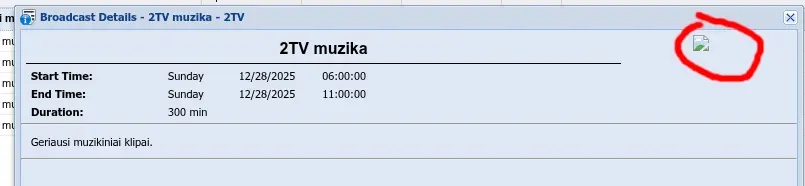
Any reason why libreelec version can't start live tv player in webui and got broken imagecache image links? Tried turning on imagecache after seeing broken url. No difference.
Trying to start live tv player resets other active streams (for example kodi tv client stops playing same or other channel on tv). Setup allows parallel streams as I can run different channels on VLC and tvhplayer at the same time.
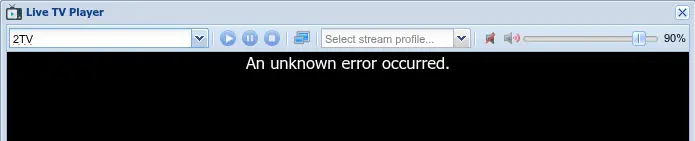
If I have to enable debug or dig some logs, it can be done.
libreelec is setup on raspberry pi4 and dtb tv hat
trixie is on rpi5, pironman 5 nvme and dtb tv hat. tvhplayer just needed plain authentication support in tvheadend to work.

Delay kodi startup for at least 40 seconds instead of default 10. Raspberry on wireless network tries to get repository information before network is up and its clock is set.
For all to work correctly I would still have to see 12.0 update channel in manual update process instead of empty list.
Set delay to more than 10 seconds and rebooted. Now I could select update channel in manual update.
Will flash sd card with 12.2.
Ignore comments about samba. Just noticed that selector is on by default in setup.
/.kodi/temp # cat kodi.log
2024-02-27 17:26:18.521 T:1010 info <general>: -----------------------------------------------------------------------
2024-02-27 17:26:18.522 T:1010 info <general>: Starting Kodi (21.2 (21.2.0) Git:21.2-Omega). Platform: Linux ARM 64-bit
2024-02-27 17:26:18.522 T:1010 info <general>: Using Release Kodi x64
2024-02-27 17:26:18.522 T:1010 info <general>: Kodi compiled 2025-01-20 by GCC 13.2.0 for Linux ARM 64-bit version 6.6.70 (394822)
2024-02-27 17:26:18.522 T:1010 info <general>: Running on LibreELEC (official): 12.0.2, kernel: Linux ARM 64-bit version 6.6.70
...
2024-02-27 17:26:21.765 T:1032 error <general>: SETTINGS: load_url # Error loading url: http://releases.libreelec.tv/releases.json
Reason: [Errno -3] Temporary failure in name resolution
2024-02-27 17:26:21.964 T:1032 info <general>: SETTINGS: __init__ # updateThread Started
2024-02-27 17:26:21.966 T:1032 info <general>: SETTINGS: set_auto_update # manual
2024-02-27 17:26:22.009 T:1093 error <general>: SETTINGS: load_url # Error loading url: https://update.libreelec.tv/updates.php?i=9076dd061576a19c7f880f7065de1b2c&d=LibreELEC&pa=RPi4.aarch64&v=12.0.2&f=raspberrypi%2C4-model-b-4g
Reason: [Errno -3] Temporary failure in name resolution
2024-02-27 17:26:22.065 T:1094 info <general>: SETTINGS: run # Waiting
Libreelec SD card setup using Raspberry Pi imager. They are still on 12.0.2 image. I know that I can manually go to 12.2, but I want to see normal update working. Network is on wifi. DNS is provided by caching dns on router and google dns.
If update is set to manual, release and available versions lists are empty. I haven't seen automatic update kick yet.
Also I did not ask to enable Samba during setup and it is enabled.
Do I have to delay kodi startup for update to fetch release information after network is up and ntp sets up clock?
OP did not tell, if they are using Jellyfin or Homerun. You can get dumb NAS box and then regret it as its CPU can't handle transcoding and case does not have option for second GPU.
Lots of questions to answer when selecting or building NAS.
NAS setup would also depend if user wants to run network media server on libreelec or on nas.
Your ssd should be automatically mounted in /media directory.
/storage/8tb-ssd is not standard libreelec directory and it would exist on /storage only if some of your actions created it. That directory does not contain librelec system data. It can contain only your personal data files and maybe indexing information that librelec created when indexing those files.
If I were you, I would be moving all /storage/8tb-ssd data into dedicated directory on 8TB SSD. It is relatively easy to do, if system utils addon is installed. If you never needed to install that addon, you probably won't be able to add it with full /storage and only Unix CLI commands can be used to move stuff out.
64GB SD card won't be enough, if you continue filling up /storage/8tb-ssd while thinking that you are writing to 8TB device.
Linux du command calculates disk usage. If you have Libreelec system utils installed, you also have mc graphical UI instead of shell CLI.
du -xhs -d 1 /storage
If you have SMB enabled, you can access logs directory over windows network too.
reduce your logs and housekeep existing logs
or find what is using filesystem.
First step in file system capacity problem is to figure out what is using it and only then look for appropriate action.
"Driver does not support the 0x2572 PCI ID."
Use different video card or try using legacy version.